
Why I Am Here, As An Ethnographic Entrepreneur?
Welcome to field&flux
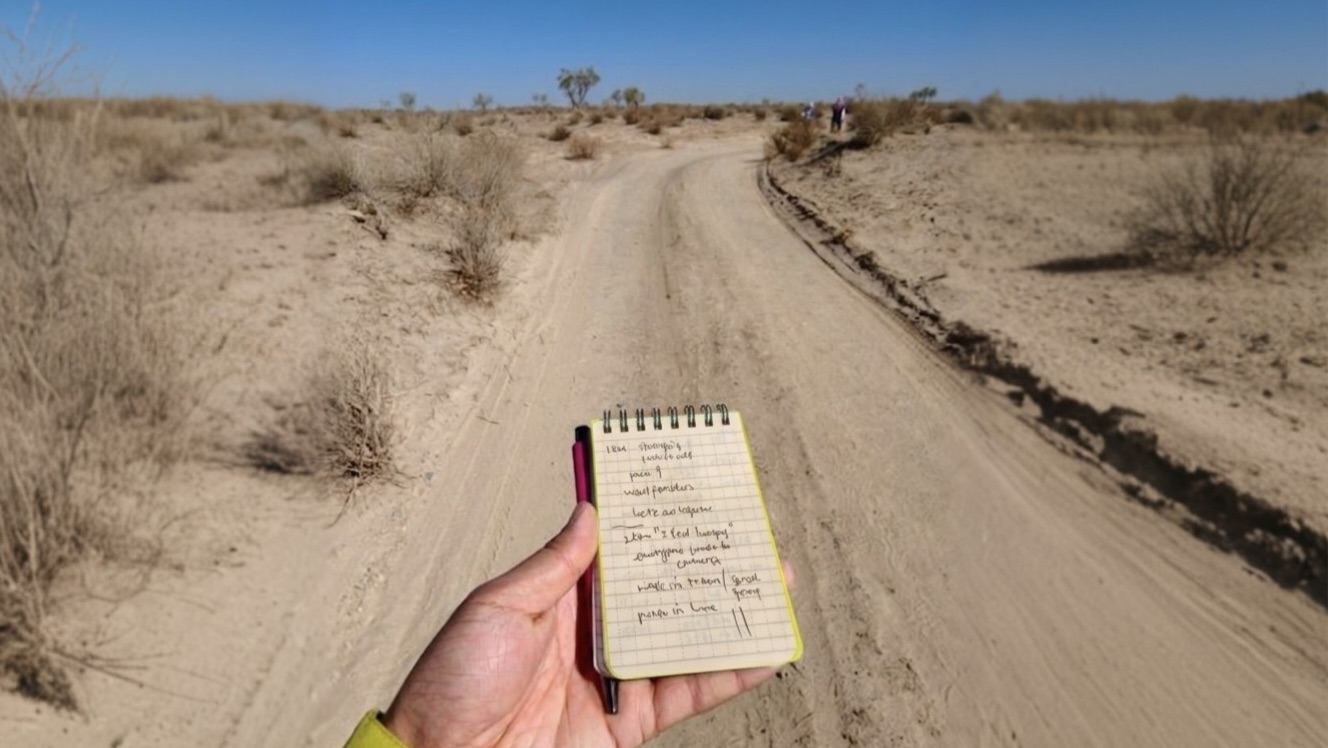
After almost twenty years of strategist, designer, and founder practices inspired by and grounded in ethnography, I decided to embrace the "ethnographic turn" in business studies and build a content platform that explores ethnographic research in entrepreneurship and management scholarship at large.
***
Why now? Why me? I indeed ask myself.
As our world grows more complex with AI, humanized robots, virtual economies, and geopolitically constrained trade, our understanding of entrepreneurship needs to evolve. To respond to scholarly calls for phenomenon-based theorization (e.g. Fisher et al., 2021) and research that solves real-world problems, we first need to understand, in the spirit of Geertz's famous provocation, "the trick is to figure out what the devil they think they are up to." (1983, p. 58). One way—arguably, the most proven way in disciplines such as anthropology—is to observe, converse, and make sense, iteratively, of what is really happening in ventures, with entrepreneurs, and within organizational and cultural contexts. This is what LLMs and agents currently cannot do, while trained scholars and scholarly practitioners excel at.
***
There is a growing conversation in management research about what Björn Johannisson calls entrepreneuring (Johannisson, 2011)—entrepreneuring as a verb, not a noun. Not "entrepreneurship" as a stable category or a set of traits, but entrepreneuring as an ongoing, embodied practice: something one does with their hands and feet and nervous system, in real time, under uncertainty. The hurdle, however, is hard to surmount: scholars engaged in academia rarely have the time or resources to fully entrepreneur, given the institutional pressures of "publish or perish"—pressures that have only intensified amid various budget cuts.
As an ethnographic entrepreneur, I occupy a different position. Pursuing a PhD in my 40s, I enrolled in doctoral studies precisely because I value the combination of rigorous academic training and an active presence in the field, building ventures. My career does not follow any single trajectory. I move between management consulting, hospitality research, service design, brand strategy, food tech, and urban mobility. What connects these roles is less obvious than what separates them. At every point, I was trying to understand people in context—not as data points or market segments, but as humans embedded in situations that shape what they want, what they fear, and what they are actually doing when they say they are doing something else. I cook, eat, shop, and live with them. The fieldwork preceded the strategy. The insight preceded the product.
***
So here it is: field & flux, a platform that bridges ethnography and entrepreneurship studies. Field is where things happen and stories flow. Flux is the condition of entrepreneurship today—ever changing, ever evolving. We share stories from the field to be translated into scientific argument, as well as of the field—about the ethnographer, and the ethnographic experience. This way, we make everything and everyone seen.
I'm here because the most important things I know about entrepreneurship I learned by doing it, and the most important things I've learned by doing it became visible only through a research lens. I'm here because scholars like Johannisson, Wacquant, and de Rond gave me language, frameworks, and legitimacy for something I had been practicing for years.
And I'm here because I think there are more people like this than the academic literature currently reflects. If this resonates with you, please give a shout.
***
Welcome to field & flux.
Comments
Leave a comment
Comments are moderated and will appear after approval.