
Finding an Owner for an Anomaly: Thoughts on Lived Problematization
Me-search, autoethnography, and my take on "lived problematization" as an entrepreneur turned doctoral student
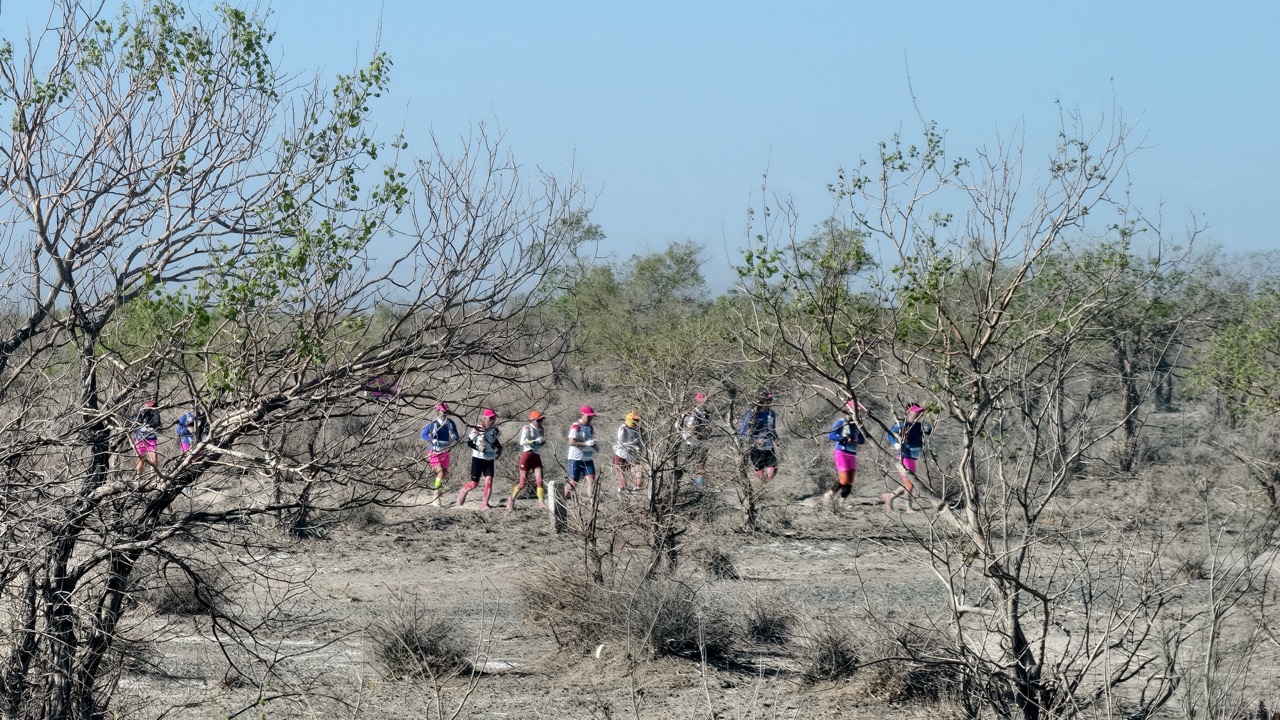
One evening, inside the tent at the Gobi Trek Camp, I was trying to squeeze in a short chat with a tent-mate, a veteran entrepreneur running a reputable manufacturing business in the cosmetics and skincare industry. I was initially curious why he joined the trek. The conversation flowed so naturally that it later felt like two businessmen discussing commercial strategies. At one point, he stopped and asked me: so where do you stand now, an entrepreneur or a PhD student?
I sat with the question for a while.
***
I thought of a recent paper on autoethnography and entrepreneurship research by Bucher and Gras. Bucher mentioned the identity rupture that followed his move from a twenty-five-year practitioner career into academia. He describes watching a fictional narrative and finding it had surfaced grief he didn't know he was carrying, and a question he couldn't put down: can we ever fully detach from a professional identity that has shaped who we are?
I have been building ventures for some time—consulting, service design, food service, urban mobility. Last year, I enrolled in a PhD program, partly because the questions my ventures kept generating had outgrown what practice alone could answer. Since then I have lived in two professional bodies that share one calendar. On some days I am the founder negotiating contracts with my partners and clients, which is its own quiet performance. On other days I am a doctoral student being asked, gently, to rebut reviewer comments on the research proposal.
So when a paper in the Journal of Business Venturing Insights argues that researchers' own entrepreneurial lives are legitimate research material, I am not a neutral reader. I am the case.
Bucher and Gras (2026) make a careful argument: autoethnography, long established in anthropology, sociology, and education, is almost absent from entrepreneurship research. And this absence is strange. Entrepreneurship scholars have often been entrepreneurs. The field studies fear, failure, identity, obsession, grief. And yet the person analyzing the data and writing the paper almost never appears in the data. They propose that autoethnography is not what the field has started calling "me-search," where a personally meaningful experience motivates a research agenda. In me-search cases the experience supplies the question, and conventional methods take it from there. Autoethnography goes further: the experience itself becomes the data, subjected to systematic sociocultural analysis, with its own trustworthiness criteria and evaluative standards. The authors walk through those standards at length, and their message is essentially: this can be done rigorously, and here is how.
***
I agree with all of it. Which is why the part that stayed with me is the part the paper names but did not fully resolve. The calls keep coming. Shepherd and colleagues in 2021. Wiklund in 2016. Now Bucher and Gras in 2026. Each round of advocacy is more methodologically sophisticated than the last. However, the publications don't really follow. A search for autoethnography in the top entrepreneurship and management journals yields almost nothing, except for papers calling for its use.
As an academic newbie, my reading is that most reviewers would ask one question the moment a study is built from a "single life": who does this represent? It is the most predictable comment in qualitative review, and it seems unanswerable when the dataset is yourself. Bucher and Gras respond that autoethnography claims analytical rather than statistical generalizability. But that answer has been available for decades, and the publication record suggests it isn't winning.
Maybe the problem is not the answer. Maybe it's the stage of research we keep trying to defend.
Mats Alvesson and Jörgen Sandberg (2011) argued that influential theory rarely comes from gap-spotting, the routine of finding what hasn't been studied and studying it. It comes from identifying the assumptions a literature quietly shares, and challenging one of them. They call this problematization, and they do it by reading, from outside a body of work.
An entrepreneur who is also a scholar can do it from inside, by living. This is what I have started calling lived problematization, and I think it is a different thing, distinct from both me-search and autoethnography. Me-search treats experience as motivation. Autoethnography treats experience as data. Lived problematization treats experience as an instrument for detecting where theory breaks: the founding and managing of a venture as a continuous process, as well as an unplanned stress test of the field's assumptions, run by someone equipped to notice the failures.
That last clause is doing real work, and it is where the scholar half of the scholar-practitioner lives and breaths. Sociologists Stefan Timmermans and Iddo Tavory (2012) made the point sharply in their work on abductive analysis: an anomaly is only visible against a background of theoretical expectation. Every founder encounters things that don't work the way they should. Without the theory, those are merely frustrations. With it, some of them become something else: a case the literature's assumptions cannot account for, noticed by the one person positioned to notice.
And this noticing is not a moment. Sætre and Van de Ven (2021) describe a long, iterative circuit on abduction in theory building. An anomaly triggers a hunch, the hunch gets tested against what's known and revised. Lived problematization runs on that engine. We don't spot a puzzle at the board meeting and write the theory section a few days later. We carry the puzzle. We journal it while it is still unresolved, before hindsight tidies it into a story. We bring it to co-authors who reject our self-serving interpretations. We map it, explicitly, against what the literature assumes. The discipline that autoethnographers call reflexivity is exactly the discipline this requires. On that, Bucher and Gras's methodological groundwork transfers whole.
***
Here is why I think this reframing matters.
Challenging an assumption does not require a representative sample. It requires one real case the assumption cannot explain. That is an existence proof, not a prevalence claim. Consider the very trek where my tent-mate asked his question: a group of accomplished entrepreneurs paying, out of their own pockets, to suffer through a desert. A field that models entrepreneurs as calculated risk-takers pursuing returns has no comfortable place for that fact. I didn't need a representative sample to notice the assumption straining. I needed to be in the tent.
The reviewer's question—who does your n of one represent—belongs to the context of justification. It is the right question for a finding offered as broadly true. It may not be the right question for the process of discovering that something needs testing at all. Lived problematization makes a smaller, harder-to-refuse claim: my life showed me a place where the theory's premise cracks. Here is the question that fell out. Test it with whatever method fits.
The experience isn't the evidence. It's the instrument that found the question.
Bucher and Gras open their paper with a line from Chen, Sharma, and Muñoz (2023): problem formulation should be a collective inquiry between researchers and problem owners, the people who actually live the problem.
Usually those are two different people, and the collaboration is arranged across a table, with a consent form in between. Sometimes they share a body. The founder doing a doctorate in his forties is not an awkward hybrid to be managed. He is a site where the problem and the training to see it live at the same address. That, I have come to think, is what this strange dual life is for. To stand where the theory meets the ground, and to file honest reports from the crack.
I still don't know how to be a founder and a doctoral student in the same sentence without one of them feeling like a costume. But I've stopped treating that discomfort as noise. It is the most reliable instrument I own.
Thank you to Shawn Bucher and David Gras for such thoughtful and action-oriented work.
References
Alvesson, M., & Sandberg, J. (2011). Generating research questions through problematization. Academy of Management Review, 36(2), 247–271.
Bucher, S., & Gras, D. (2026). Utilizing autoethnography in entrepreneurship research. Journal of Business Venturing Insights, 25, e00587.
Chen, S., Sharma, G., & Muñoz, P. (2023). In pursuit of impact: From research questions to problem formulation in entrepreneurship research. Entrepreneurship Theory and Practice, 47(2), 232–264.
Sætre, A. S., & Van de Ven, A. H. (2021). Generating theory by abduction. Academy of Management Review, 46(4), 684–701.
Shepherd, D. A., Wiklund, J., & Dimov, D. (2021). Envisioning entrepreneurship's future: Introducing me-search and research agendas. Entrepreneurship Theory and Practice, 45(5), 955–966.
Timmermans, S., & Tavory, I. (2012). Theory construction in qualitative research: From grounded theory to abductive analysis. Sociological Theory, 30(3), 167–186.
Comments
Leave a comment
Comments are moderated and will appear after approval.