
Doing Ethnography in a Bootstrapped Startup
Reflections on Ethnography from Running an Ebike Startup in Europe
47.6 million ebikes sold globally in 2020. A projected $80.6 billion market by 2027. 10% compound annual growth. The numbers were real, but they weren't why we started the ebike brand in the first place.
We started because of a different kind of data: observation on the streets of Paris, Stockholm, Amsterdam. The observations led to some annoying findings: people who owned ebikes were spending, on average, 1.3 hours searching online for a single accessory that would fit their bike. One out of every such search ended in a return. If they wanted to see it in person, the nearest store with a compatible option was 13 kilometers away. And even then, it was a bet. They would often compromise, buying something that worked enough rather than something that worked right.
***
This was the gap in the ebike experience.
The ebike industry had solved the vehicle problem but had not yet solved the life problem: the fact that people don't buy ebikes to have an ebike. They buy them to get things done. Commute. Shop. Take the kids to school. Go picnicking. Carry ski gear to the trailhead. And no single bike, out of the box, could serve more than two or three of those purposes without significant friction.
The insight we kept returning to: a significant trigger for people to ride ebikes more is whether the bike can be used for different scenes every day. Modularization, accessorizability, extendability — the industry had none of these. Every accessory came from a different brand with different attachment systems, and the bike stood in the middle like an orphaned hub.
The product concept we developed was called an eBike Lifestyle System.
The formula we used internally was almost absurdly simple: (bike + accessories) raised to the power of the mission in life equals accomplishments, possibilities, more. We meant it literally. One platform could serve 8 core missions depending on what you attached to it. The bike didn't change. What changed was what you mounted to it.
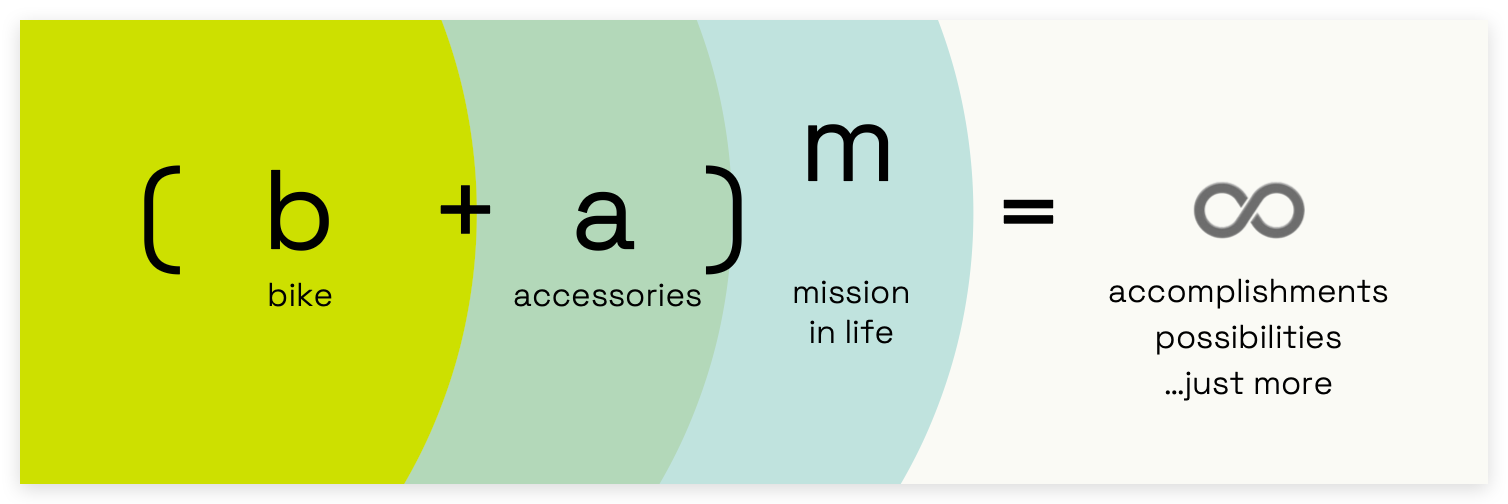
This sounds obvious in retrospect. In practice, it required a complete reversal of the standard product development sequence. Most hardware startups start with a product and ask who will buy it. We started with the missions — the everyday jobs that real people were trying to accomplish — and worked backward to the product. The accessory ecosystem was not an afterthought. It was the point. The bike was the platform.
I want to be precise about where the research came from, because "consumer insights" is a phrase that covers a wide range of rigor.
Ours came from industry interviews, retail observations, and the discipline of watching what people actually do with their bikes. Those insights shaped our strategic decisions across the board: business model, distribution, product design principles, logistics, and after-service arrangements.
***
That said, there's something uncomfortable about what ethnographic practice in a startup actually feels like. Ethnographic research at any meaningful scale can be a luxury for bootstrapped startups — the time spent in the field, analyzing findings, and generating insights is costly, both operationally and financially. And even when the research is solid, convincing stakeholders — partners, investors, OEMs — is its own challenge. It doesn't feel like a methodology to them. It feels more like a disposition you have to keep defending against the pressure of the build. The art lies in knowing what the research has already answered and what it hasn't.
The body of knowledge accumulated through ethnographic research doesn't expire. But it doesn't answer every question, either. It gives you a foundation. What you build on it is still a bet.
I'm writing this now that the venture has run its course. Startups end; ours ended too.
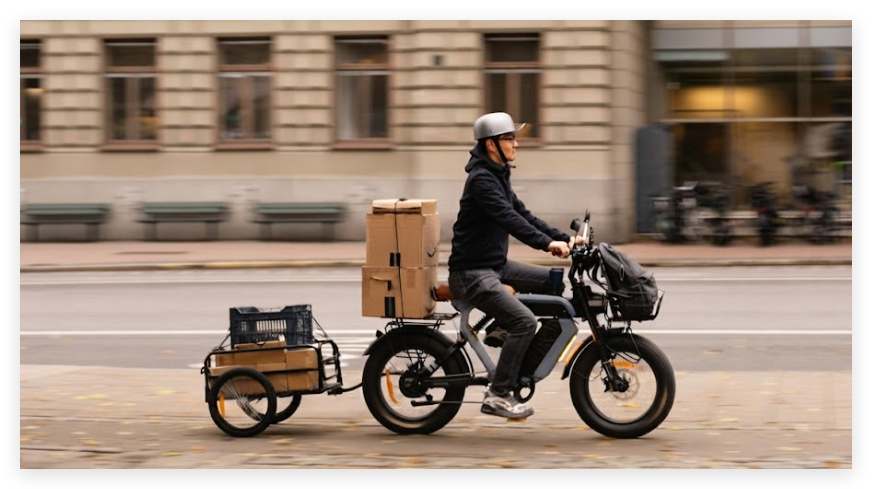
What I carry forward is a set of images. A retailer at a trade show handling the accessory mounting system with his fingers, turning it over, testing the mechanism, nodding. A photo from a product demo: someone's cargo bike piled improbably high with parcel boxes, a folding crate, and a backpack. The research was in all of those. And the research, in the end, was the most honest thing we built.
If you're curious about how I approach ethnographic research within startup environments, feel free to reach out.
Comments
Leave a comment
Comments are moderated and will appear after approval.